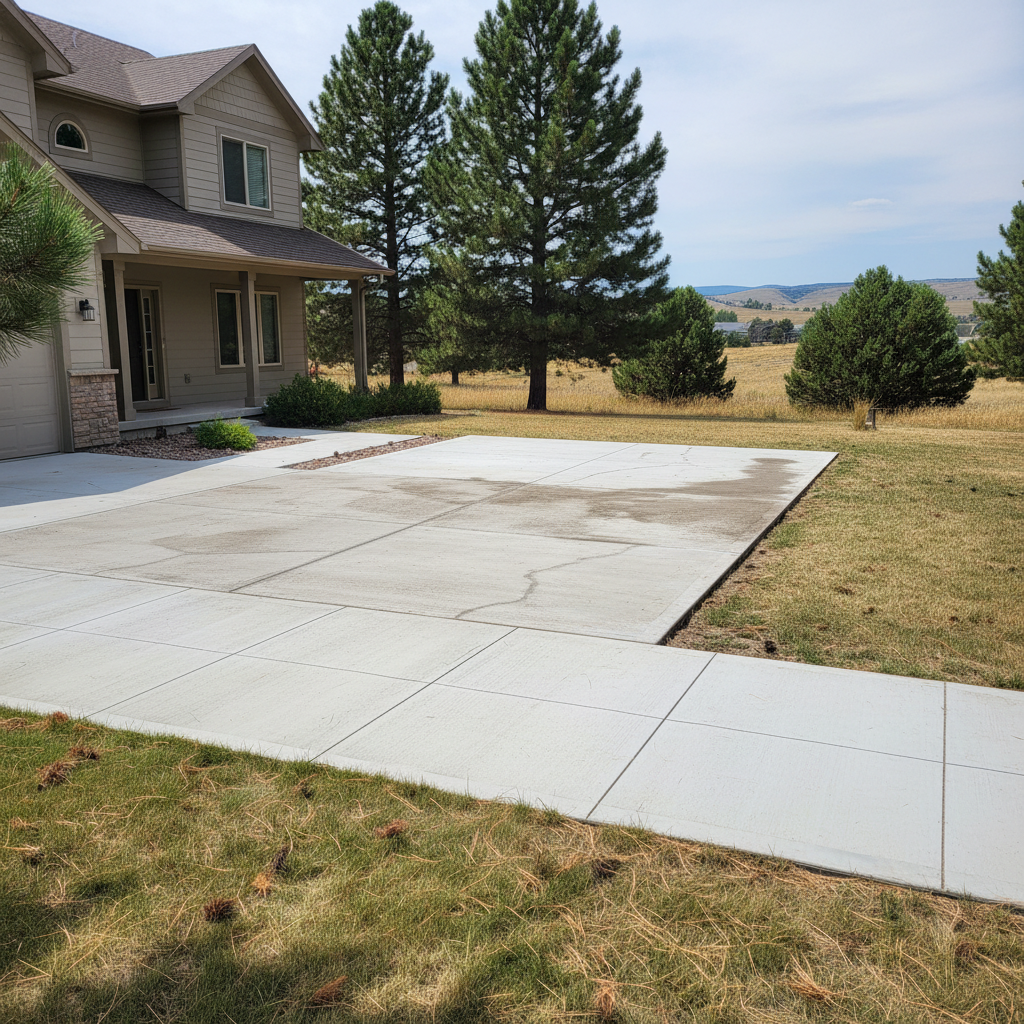
Got cracks in your driveway, patio, or sidewalk? It's a common problem here in Billings, especially with our freeze-thaw cycles and expansive clay soils that really put concrete through its paces. You're probably wondering what it's going to cost to get it fixed right. I get that question all the time, and while every job's a bit different, I can give you a solid idea of what factors drive the price and what you should expect to pay.
What Makes Concrete Repair Cost What It Does?
A few key things really push the price up or down when you're looking at concrete repair. It's not just about the size of the crack, believe it or not.
- The Type of Damage: Is it a hairline crack that just needs sealing, or is it a major slab settlement where a whole section has sunk? Surface spalling (flaking) is different from deep structural cracks. Each type of damage requires a different approach, and some are way more labor-intensive than others.
- The Repair Method: Are we talking about simple crack filling, grinding down uneven joints, slab jacking (also called mudjacking or polyjacking), or a full-on tear-out and replacement? Slab jacking, for example, is usually more cost-effective than replacing a whole slab, but it's not always an option for every type of damage.
- Accessibility: Can we easily get our equipment to the damaged area? If it's a tight spot in your backyard, or we have to work around landscaping, that's going to add to the labor time and complexity.
- Size and Scope: This one's obvious, right? A small crack in a sidewalk is cheaper than repairing a huge section of a commercial parking lot. We often price by the linear foot for cracks or by the square foot for larger areas needing replacement or jacking.
- Prep Work Required: Sometimes, we have to do a lot of cleaning, grinding, or even remove old, failed repairs before we can start the actual fix. That's all time and materials.
Typical Repair Cost Ranges in Billings
Alright, let's talk numbers. Remember, these are general ranges, and your specific quote will depend on the factors above. But this should give you a good ballpark.
- Crack Filling/Sealing: For minor, non-structural cracks (think hairline to about 1/4 inch wide), you're generally looking at $5 to $15 per linear foot. This usually involves cleaning the crack, applying a flexible sealant, and sometimes broadcasting sand over it for a better finish. If it's a really long crack, the per-foot price might come down a bit.
- Surface Patching/Resurfacing: For spalling, minor surface damage, or small holes, a good quality patch or thin overlay might run you anywhere from $3 to $8 per square foot. This is for cosmetic fixes or to protect the concrete from further deterioration, not for structural issues.
- Slab Jacking (Polyjacking/Mudjacking): This is for lifting sunken concrete slabs, like driveways, patios, or sidewalks. It's often much cheaper than replacement. You're typically looking at $4 to $8 per square foot, depending on the depth of the void and the amount of material needed. A small patio might be a minimum charge of $500-$800, while a larger driveway section could be $1,500-$3,000+.
- Partial Concrete Replacement: If a section is too far gone for repair, we might need to cut out and replace just that part. For a typical 4-inch thick residential slab, expect to pay $10 to $18 per square foot. This includes demolition, hauling away debris, new base prep, rebar or mesh, and pouring/finishing new concrete.
- Grinding/Leveling Uneven Joints: If you've got trip hazards where one slab is higher than another, grinding it smooth can cost $50 to $150 per joint, depending on the length and how much needs to be removed.
Keep in mind that many contractors, including Top Line Concrete, will have a minimum service charge for smaller jobs, often in the $400 to $700 range. It just doesn't make sense to mobilize a crew and equipment for a tiny $50 repair.
What Should a Good Quote Include?
When you get a quote, don't just look at the bottom line. A good, transparent quote should spell out exactly what you're paying for. Here's what I always make sure our quotes include:
- Detailed Description of Work: What exactly are we fixing? Which areas?
- Method of Repair: Are we filling, jacking, patching, or replacing?
- Materials Used: What kind of sealant, patch material, or concrete mix?
- Preparation Steps: Will we clean, grind, or remove old material?
- Cleanup and Debris Removal: Who's responsible for hauling away the old stuff?
- Warranty Information: Does the work come with a guarantee? For how long?
- Total Cost: Clearly itemized, if possible, but at least a final price.
- Payment Schedule: When are payments due? (e.g., deposit, final payment)
How to Avoid Overpaying for Concrete Repair
Nobody wants to get ripped off, especially when you're just trying to fix something around your home. Here's my advice:
- Get Multiple Quotes: This is a no-brainer. Get at least three quotes from reputable local contractors. It helps you compare not just price, but also the proposed solutions and the contractor's professionalism.
- Ask for References and Check Reviews: See what other folks in Billings have to say about their work. Word of mouth is huge in a town like ours.
- Understand the Scope: Make sure each quote is for the same scope of work. If one quote is super low, they might be cutting corners or not including something important.
- Don't Go with the Absolute Cheapest: The lowest bid isn't always the best value. Sometimes, a slightly higher price means better materials, more experienced labor, or a stronger warranty. You don't want to pay twice to fix the same problem.
- Ask About Warranties: A good contractor stands behind their work. Ask what kind of warranty they offer on their repairs.
- Beware of High-Pressure Sales: If someone is pushing you to sign on the spot or offering a